Most hotel linen does not wear out on the bed. It wears out in the laundry. Understanding what happens there helps you choose linen that lasts, and look after it so it keeps its colour and feel.
Heat and wash chemistry
Commercial laundries use higher temperatures and stronger detergents than domestic machines to meet hygiene standards. Over time, chlorine bleach in particular weakens cotton fibres and can yellow finishes. Controlled bleach use and correctly dosed chemistry extend the life of every piece.
Mechanical action
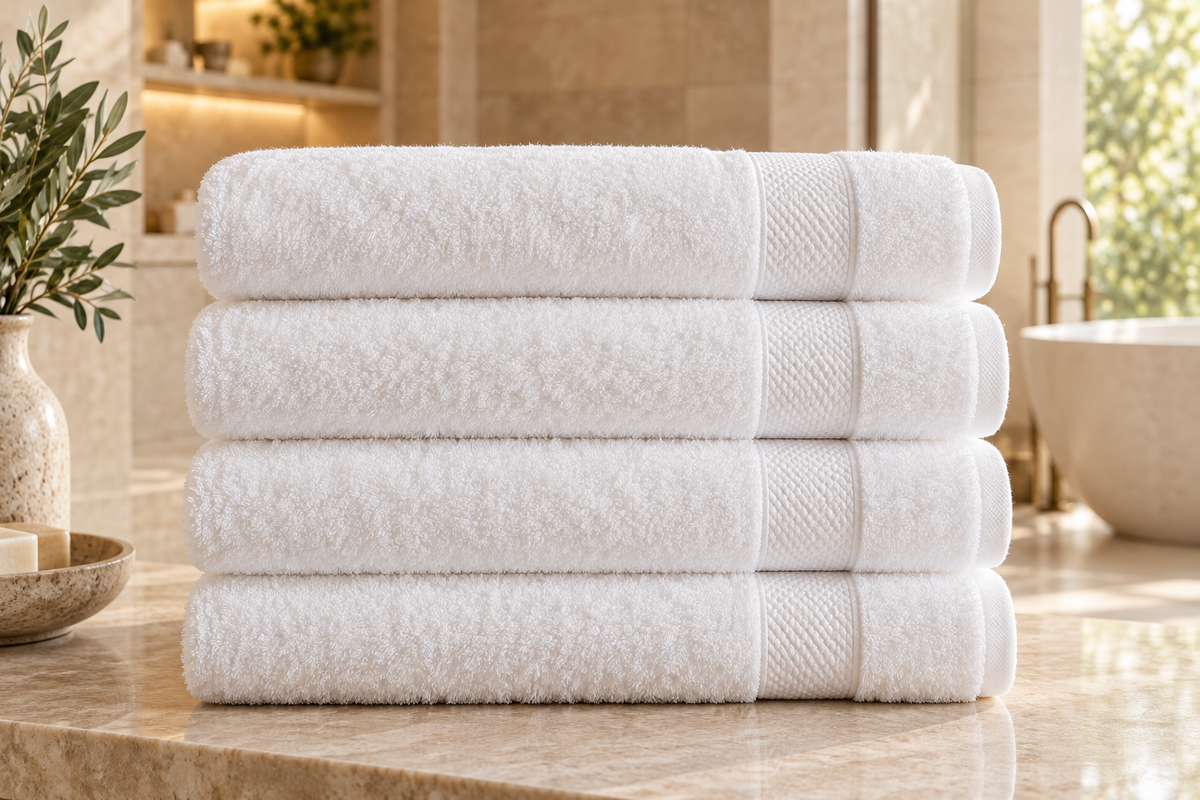
Overloaded machines, long cycles and aggressive extraction all abrade fabric. Seams and hems take the most stress, which is why reinforced hems and double-stitched towel edges matter for commercial linen.
Drying and finishing
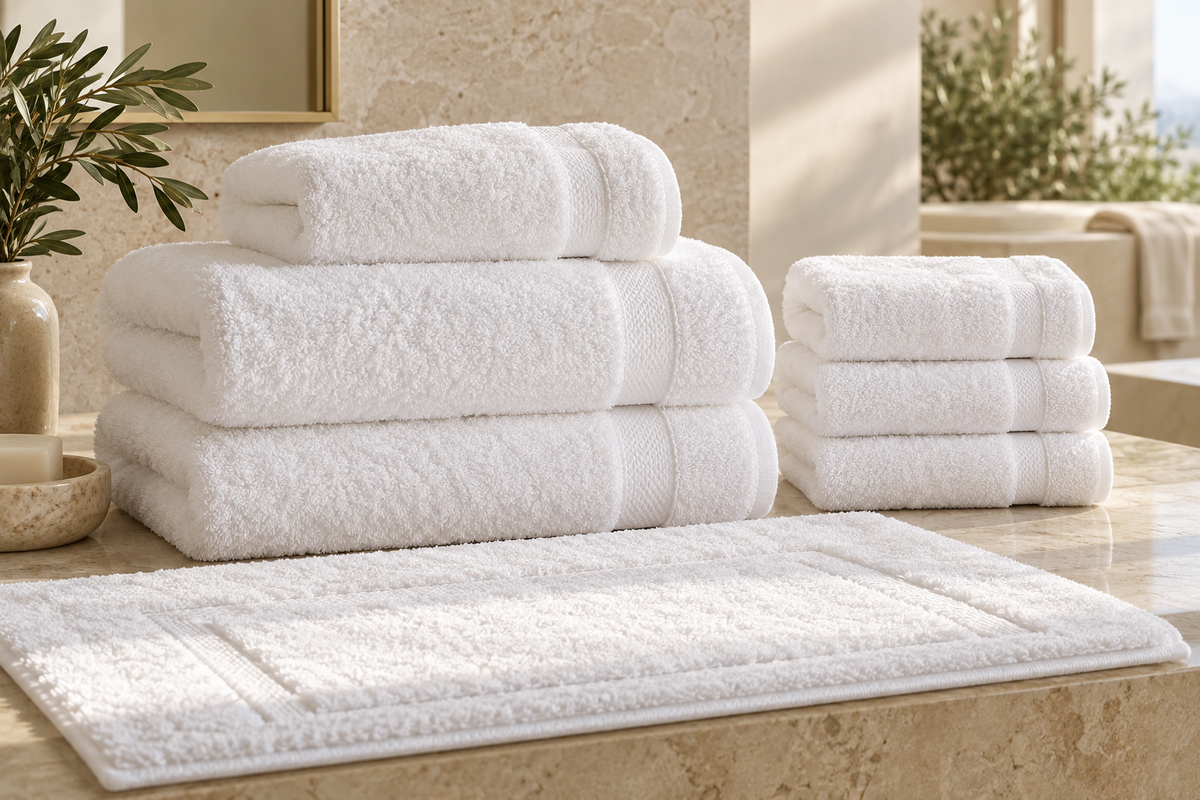
- Towels should not be over-dried; excessive heat makes terry harsh and brittle.
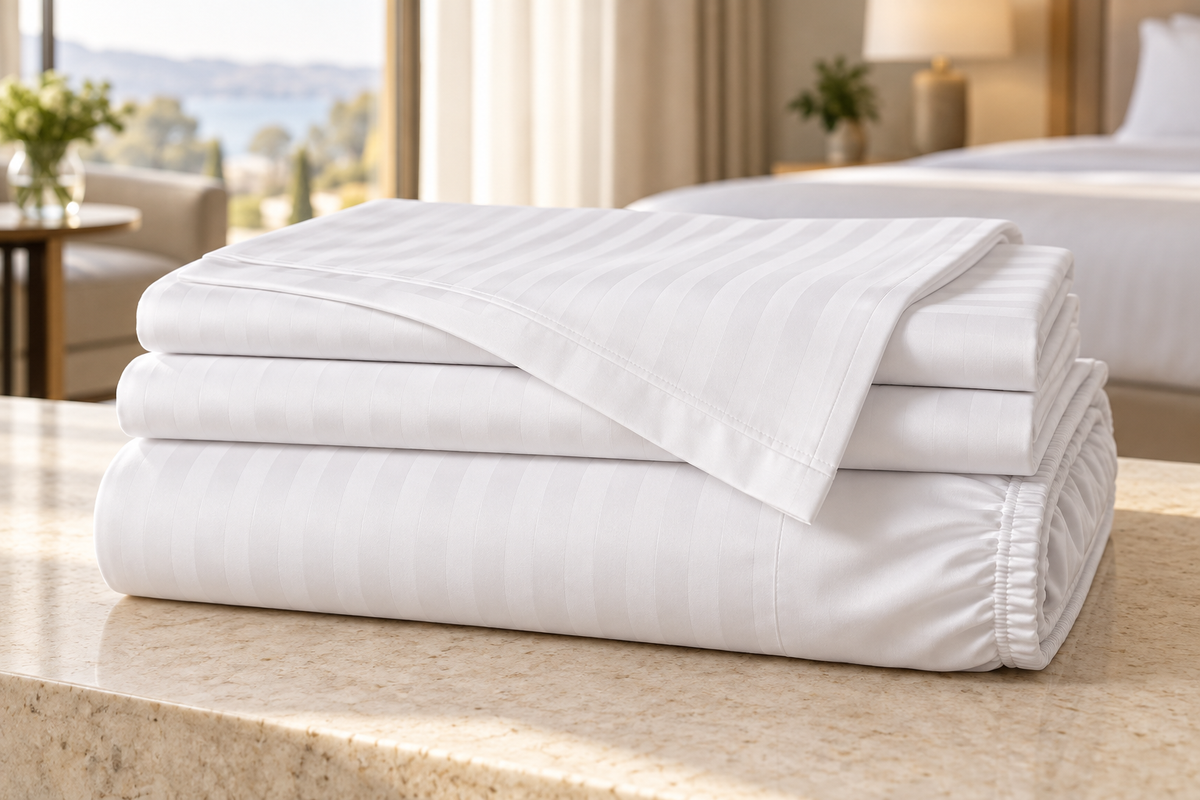
- Sheets and duvet covers are often finished on flatwork ironers. Pre-shrunk (sanforised) fabric keeps its dimensions through this process.
- Fabric softener should be used sparingly on towels; it coats the loops and reduces absorbency.
Rotation and par
Linen that rests between washes lasts longer. Holding an adequate par level - typically three or more sets per bed - and rotating stock evenly prevents a few sets taking all the wear. Our procurement checklist explains how to calculate par.
First use
Launder new linen before it goes into rooms. It removes any finishing residues, opens towel loops and lets you check colour and shrinkage.
Specify with your laundry in mind
When you request a quote, tell us how and where your linen is laundered. It helps us recommend the right thread count, weave, GSM and construction. See our approach to quality, or explore hotel sheets and hotel towels.